Filmmaker Makes Documentary Exploring Sexual Terrorism at Spelman and Morehouse
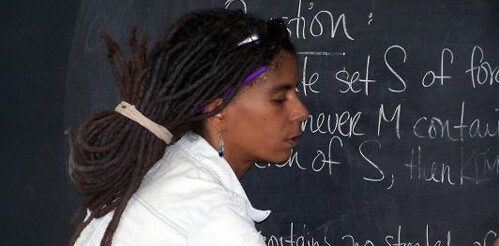
Laura Rahman's stirring documentary, Broken Social Contracts, explores sexual assault on the campuses of Spelman and Morehouse. The film raises tough questions about the complicity of Black power structures in perpetuating the cycles of violence.
Laura, a graduate of Spelman college, graciously agreed to share her insights on the film with us.
What inspired you to create Broken Social Contracts?
What inspired me to make this documentary was the overwhelming amount of pain and silence surrounding the students at my alma mater, Spelman College, around sexual terrorism within the Atlanta University Center’s (AUC) Campus community. The lack of active attention given to the subject of sexual terrorism in the AUC was disturbing considering the statistics. I desired to produce what I call a living documentary film (a film that utilizes phenomenological research to acquire information and direct the project) that would serve as a reminder of a subject that never dies as long as women or men are being sexually terrorized and violated regardless of race or class. The Spelman and Morehouse gender dynamics have a long history of sister-brotherhood, and as in many families there are problematic circumstances that often go unaddressed. Broken Social Contracts was an opportunity to address one of those problems within a collegiate family that has national and international recognition. The film not only lends itself to the those directly affected by the institution but it also presents the opportunity to have open discourse for all academic institutions. It can assist them in looking closer at what is happening on campuses all over the world.
Did you encounter a lot of opposition to you filming this documentary?
I did not encounter much opposition when filming the documentary. Broken Social Contracts is the second piece and follow-up to Breaking Silences a short I directed while attending Spelman which captured the spark during the protest in 2006 at the AUC. While compiling information for Breaking Silences, under a grant my professor received from the National Black Programming Consortium for the footage I captured during the protest, people on both sides continued to approach our team and break their silence about sexual terrorism on the campuses. After completing Breaking Silences, I had enough footage to compile another film which resulted in Broken Social Contracts.
I actually received a great deal of support in the process of filming Broken Social Contractsfrom both sides. Those who agreed with its message and those who were in disagreement with the tactics of the protest throughout the AUC were forthcoming with information on and off camera. After the Broken Social Contracts documentary was posted online and available for screening there was a lack of follow through from those who initially thought it was beneficial to our communities. I have not received direct opposition but there remains a silence around the work and some stifling of its fluid movement throughout certain circles.
Did you have a hard time getting Morehouse men to participate in filming?
The Morehouse men who participated in the film were gracious in their testimonials. Most of them sought out our team and volunteered their voices. They were eager to bring about an understanding of their position. The majority of Morehouse men who did approach us were in favor of eradicating sexual terrorism on our campuses.
Your documentary focused on gender relationships in the AUC. Is there something different about this atmosphere that makes dynamics unique?
I chose to focus on the gender relationships in the AUC due to overwhelming response at the 2006 protest. There was a deep level of pain I had not previously seen encapsulated in one spot over gender dynamics. It was my desire for people to look at the film and see the similarities that the AUC protest shared other social contracts i.e.: work relationships, sorority/fraternity relationships, church relationships and so forth, where women rise out of silence and demand their voices heard. Although I focused on a sliver of a community, I hoped viewers would recognize broken social contracts in the many facets of our lives while acknowledging how gender politics intricately play out in our patriarchal society.
In your opinion, is sexual violence even more insidious in "elite" circles?
I do not think sexual violence is more insidious in “elite” circles. “Elite” circles more often focus their attentions on how they are portrayed to the public. I think sometimes the truth becomes gray and misconstrued in order to protect the members within these circles. Seemingly, when there is a threat or exposure of some ill within the “elite,” the hierarchy is affected and some type of concealment is necessary to remain fortified and privilege. As sexual violence is revealed within any circle it is a terror most do not wish to discuss. However, seemingly “elite” circles’ public presentation is threatened by a discussion on sexual violence and can create insidious repercussions for those who choose to speak out and reveal its social infractions.
Who's more culpable for effecting substantive change in gender roles in the Black community men or women? What can women do to change the status quo of accepted sexual terrorism?
I think that neither men nor women in the Black community have more responsibility than the other to eradicate harmful gender roles. Balance is necessary for healthy relationships. When Black men presume male privilege as their “rightful” place in our relationships and Black women support this male privilege as a result of seeing themselves as the lesser gender, this situates both men and women culpably affecting substantive change. When we begin to see ourselves as necessary components of a complete circle then there is no need for one person to dominate another. It is domination within our relationships that has us imbalanced.
What will it take for gender dynamics to change on college campuses across the country?
Providing open, honest, safe spaces free from patriarchal positioning is how gender dynamics on college campuses across the country can begin to create change. We need more opportunities for women and men to speak where organizations are dedicated to the eradication of sexual violence and it’s a mainstay of the institution. There is a need for the consistent intentionality on the safety of our women. A few lectures during October (domestic violence awareness month) and April (sexual assault awareness month) is not sufficient for the healing and redirecting of our gender relationships. It is necessary for a constant “in your face” commitment by our institutions. Classes that are mandatory for graduation such as a violence against women’s class will send a serious message as to how we educate our young adults on relating to each other.
As I have spoken with students after they viewed the film, recognizably more men stood and said they finally get it. They stood and testified openly that based on the position of the people in Broken Social Contracts and my willingness to share these experience they finally understand why their mothers, aunts, friends were outraged over sexual terrorist incidents. Many men and women do not understand the effects. Despite the many books and lectures that are presented on campuses. However, with a documentary film such as Broken Social Contracts there is no denying we have a huge problem that is universal and as one activist stated in my film “those of us who can speak out must speak for those who can not speak.”
View the first part of Broken Social Contracts.

No comments: